

A product can sell all day and still make you very little money.
That is the trap with print-on-demand products. A bestseller may look attractive until production, shipping, platform fees, refunds, discounts, and ad spend start taking their share.
Profit also does not look the same across every category. One hoodie can leave you with a healthy amount from a single sale, while a lower-priced item may earn its keep through bundles, add-ons, or repeat orders.
So which products are actually worth selling in 2026?
We compared 10 categories based on demand, pricing room, shipping costs, personalization potential, competition, and the role each one can play in your store.
There is no universal winner. Profit depends on your target audience, niche, base cost, product quality, fulfillment location, selling channel, and the price customers will realistically accept. Shipping options, return risk, personalization, bundles, repeat demand, and competition also change the economics of each product.
More importantly, do not judge an online store by margin percentage alone. A cheap item with a 50% margin can contribute fewer dollars than a higher-priced custom product with a smaller percentage margin. Treat profitability as unit economics, using the real amount left after variable costs.
Some print on demand products earn their place through higher selling prices. Others stand out because they are inexpensive to ship, easy to personalize, or well suited to bundles and repeat purchases.
The comparison below looks at the commercial strengths of each category rather than assigning unsupported universal profit percentages. Shopify also points out that POD earnings are influenced by factors such as product choice, pricing, supplier costs, demand, and seasonality.
| Product | Profit Potential | Shipping Efficiency | Competition | Strongest Commercial Use |
| T shirts | Medium | Good | Very high | Broad demand and niche testing |
| Hoodies and sweatshirts | High | Medium | High | Higher profit per order |
| Phone cases | High | Very good | High | Personalization and trend designs |
| Posters and wall art | High | Good | Medium to high | Art and home décor |
| Personalized jewelry | High | Excellent | Medium to high | Premium gifting |
| Mugs | Medium | Weak | High | Personalized and occasion gifts |
| Journals and notebooks | Medium to high | Good | Medium to high | Lifestyle and personalized niches |
| Tote bags | Medium | Good | High | Cross-selling and catalog expansion |
| Hats and embroidered products | Medium to high | Good | Medium | Premium niche apparel |
| Stickers | Medium individually | Excellent | High | Bundles and add-ons |
These ratings are editorial classifications based on characteristics such as pricing room, shipping efficiency, demand, competition, and personalization potential. Actual results will still depend on your print provider, niche, selling channel, design quality, and fulfillment costs.
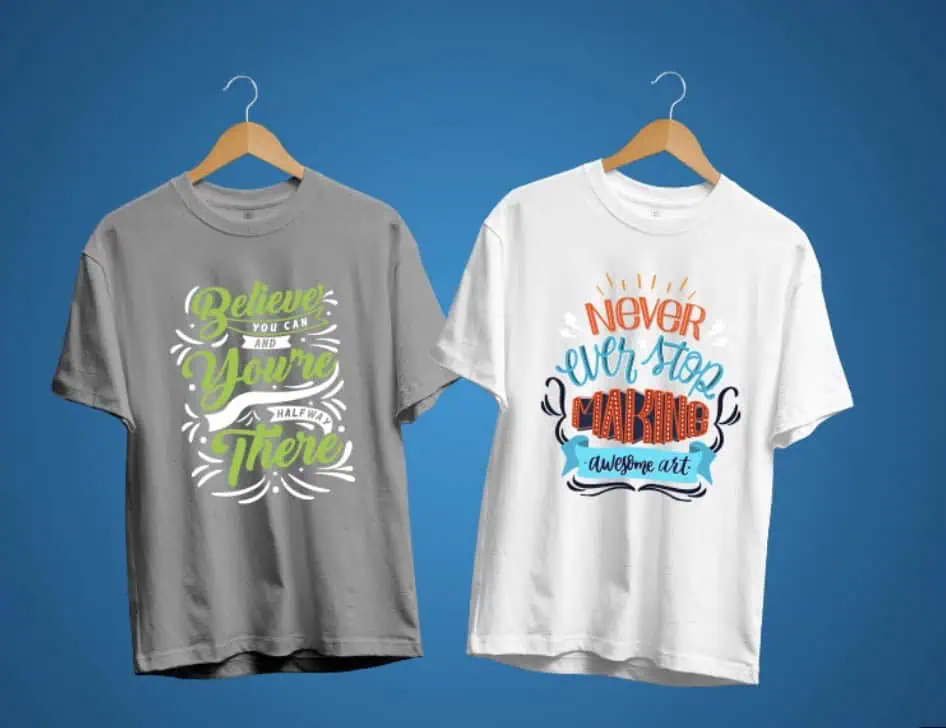
T-shirts remain one of the easiest print-on-demand products to test because demand spans ages, interests, and seasons. Fulfillment is widely available, shipping is relatively simple, and one design can be adapted to almost any audience.
Shopify currently lists typical base costs around $7 to $10 and retail prices around $20 to $30. Your actual margin still depends on the print provider, garment, shipping destination, and selling fees.
T-shirts work best when you sell to a defined niche, such as:
Competing mainly on price can quickly weaken profit.
They are also useful for testing designs before expanding winning concepts into hoodies, totes, posters, or stickers.

Hoodies can support a higher selling price than basic apparel, giving you more contribution dollars from each order. Shopify currently estimates all-over-print hoodies at roughly $25 to $35 in base cost and $55 to $85 at retail.
They work particularly well for:
A T-shirt earning $8 before marketing and a hoodie earning $20 may have similar percentage margins, but the hoodie leaves more room for customer acquisition costs.
The tradeoff is higher fulfillment expense, costlier replacements, more size and color variations, and seasonal demand in some markets. Embroidery and all-over printing can raise production costs further.
If one design needs several colors, views, or front and back mockups, Bulk Mockup can process multiple Smart Objects across compatible PSD templates in batches.

Phone cases work well in POD because they are lightweight, easy to ship, useful every day, and free from clothing size issues. They can also sell as gifts or repeat purchases when customers change devices.
Etsy reported an 835% increase in searches for polka dot phone cases in its Spring and Summer 2026 trend report. The figure reflects one specific style, not the whole category, but it shows how checking demand at the design level can reveal stronger opportunities.
Good design directions include:
Before choosing a print provider, check case strength, print quality, device fit, and replacement terms. You should also keep your product catalog focused on phone models people are actively buying rather than filling it with outdated options.

Wall art can command more than the cost of the blank product because buyers are paying for the artwork itself. Etsy’s Spring and Summer 2026 report found searches up 110% for wall art décor, 80% for gallery prints, and 38% for abstract art.
Popular formats include:
One design can also be adapted across posters, framed prints, canvases, and related décor products. The main cost risks come from large format shipping, frames, damaged deliveries, print resolution, and replacement expenses.
Room scene mockups matter here because shoppers need to judge scale, colour, and how the artwork may look in a space. Bulk Mockup can batch place multiple artworks into PSD wall art scenes, reducing the manual work involved in creating larger product catalogs.
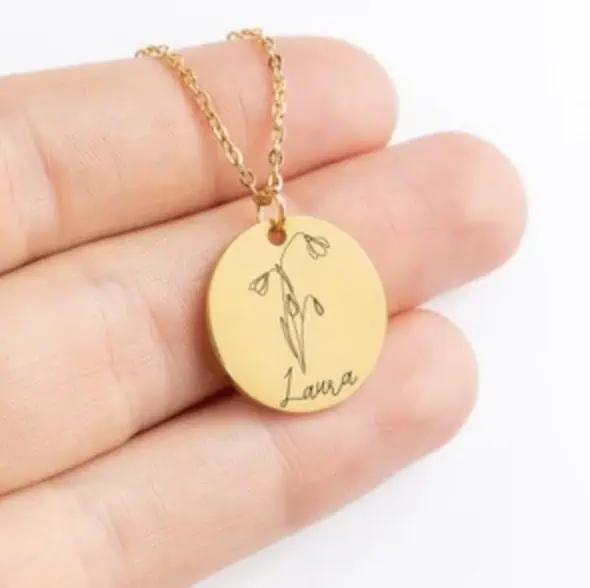
Jewelry earns differently from most POD merchandise because buyers often pay for meaning, not just materials. Shopify currently places engraved jewelry at about $10 to $20 in base cost, with retail prices around $35 to $60 or more.
It suits gift-led purchases such as:
An engraved necklace with a date, initials, or message is harder to compare directly with a generic necklace, which can support stronger pricing.
The risks sit in the details. Material quality, engraving accuracy, gift packaging, replacement terms, and spelling mistakes can all affect customer satisfaction and profit. For custom orders, it is worth checking whether your print partner offers clear preview or approval steps before production.

A mug rarely needs much explaining to the buyer. It is familiar, useful, and easy to tailor for birthdays, weddings, workplaces, professions, pet owners, and seasonal gifts.
They tend to suit audiences such as:
The economics need more attention. A standard POD mug may cost roughly $4 to $7 before shipping and sell around $12 to $20, but its weight and breakage risk can eat into a modest selling price.
Calculate profit only after supplier shipping and selling fees are included. Mugs usually make more sense for custom gifts, bundles, multi-item orders, or stores with low customer acquisition costs.
Supplier packaging also matters. Chipped, cracked, or misprinted orders can turn an otherwise profitable sale into a replacement expense.

“Notebook” is a crowded product idea. “Personalized travel journal for couples” gives the shopper a purpose, recipient, and reason to spend more.
Etsy’s 2026 marketplace data points in that direction. Searches for traveler journals doubled, memory journals rose 189%, leather journal covers increased 126%, and journal charms jumped 395%.
You could build products around:
Journals also lend themselves well to bundles with bookmarks, stickers, stationery, or matching accessories, which can raise order value.
Before adding them to your ecommerce platform, compare paper thickness, binding strength, cover finish, print accuracy, shipping charges, and customization costs. Those details matter far more than simply choosing the cheapest print provider.
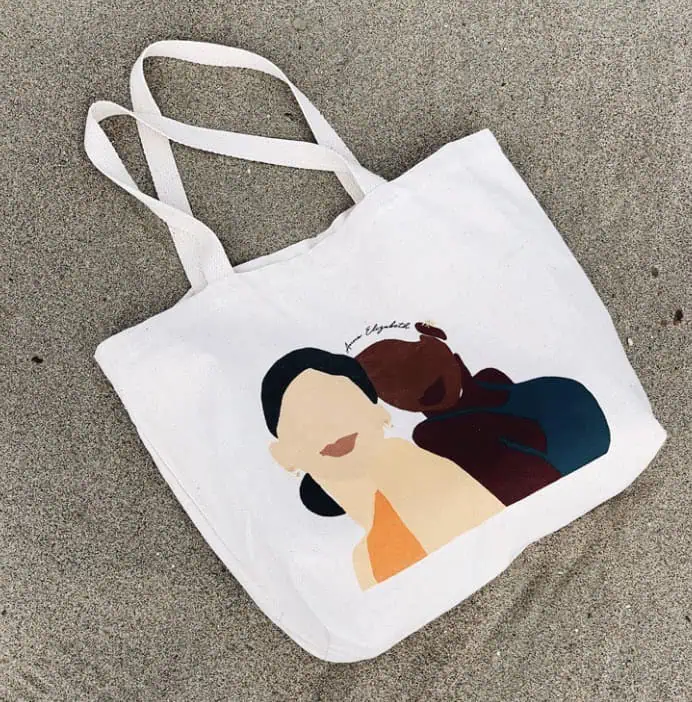
A tote does not need to carry the whole store. Its real value often appears after you already know which artwork customers like.
Take a design that performs well on a T-shirt and adapt it to a tote. You have created another SKU from existing creative work, which makes the category useful for readers, teachers, artists, hobby groups, travel niches, and event merchandise.
Totes also benefit from:
Current Shopify guidance treats tote bags as an established POD category but gives them lower profit potential than several premium products.
You can raise perceived value with heavier fabric, embroidery, custom names, or coordinated collections. For many sellers, the better play is not competing with generic totes, but extending designs that have already proved they can sell.

For niche merchandise, a well-embroidered cap can feel more substantial than a basic printed accessory. That makes hats a good fit for outdoor groups, sports communities, trades, creator brands, local merchandise, and minimalist fashion.
The format also keeps sizing simpler than most apparel, while compact logos and short text work naturally on the front or side panels. When the finished piece looks polished, buyers may accept a higher retail price.
Embroidery does come with design limits:
Printify also notes that previews may differ slightly from the finished embroidery because thread thickness, texture, and stitching affect the final appearance. Ordering samples is therefore important before you add the product to your store.

Stickers can look highly profitable on paper because the percentage margin may be strong, but percentage alone can be misleading. If a $5 order leaves $2.50 after variable costs, that is a 50% contribution margin, yet only $2.50 remains for marketing and overhead.
Their commercial strength often appears when they increase basket value through:
They are lightweight, easy to ship, and simple to reuse across different artwork collections. Some print-on-demand companies also offer sticker sheets and multiple sticker formats, which gives sellers more ways to package designs.
For an online business, stickers often work better as an add-on than as the main purchase. They can help raise order value without requiring a completely new product concept.
Subtracting a print provider’s base cost from your selling price gives you only a rough starting figure. A useful profit calculation also needs to capture shipping, marketplace charges, payment fees, refunds, reprints, discounts, and advertising. Shopify’s current pricing guidance similarly includes base cost, printing, platform fees, payment processing, and shipping when calculating POD profit.
Start with the amount attached to the customer order:
Product selling price + customer paid shipping = order revenue
If you offer a discount, subtract it from revenue or record it separately as a variable selling cost. Use one method consistently so the same discount is not counted twice.
Next, total everything charged to produce and send the custom product. Depending on what you sell, this can include:
These amounts can vary by product, print partners, destination, and shipping options, so use the current figures from your own provider rather than relying on old averages.
Your ecommerce platform or marketplace may take a portion of each sale. Include payment processing, transaction charges, listing costs, subscription allocation, and affiliate commission when applicable.
For example, Etsy currently charges a $0.20 listing fee and a 6.5 percent transaction fee, while payment processing varies by country.
Not every customer order reaches your bank account untouched. Allow for the costs created by discounts, refunds, damaged products, reprints, and corrections to custom orders.
These expenses are easy to overlook because they do not occur on every sale. Over enough orders, however, they affect the real economics of your online business.
Once the variable non-marketing expenses are included, calculate:
Order revenue − variable non-marketing costs = contribution profit before acquisition
This figure shows how much one sale contributes toward advertising and business overhead before you pay to acquire the customer.
If you rely on paid traffic, subtract the cost of acquiring the order:
Contribution profit before acquisition − CAC = contribution profit after acquisition
This matters especially when you use Meta, Google, TikTok, or other paid channels. A product can appear profitable before advertising yet lose money once acquisition cost is included.
Finally, measure the percentage of revenue you retain:
Contribution profit ÷ order revenue × 100 = contribution margin
Compare both the percentage and the actual dollars generated per order. A stronger percentage does not always make a product more valuable if another item leaves substantially more cash after variable costs.
Supplier pricing, shipping costs, and platform fees can change, so calculate using the figures currently attached to your store, provider, and sales channel rather than treating any published example as permanent.
Etsy is especially suited to products people search for with a recipient, occasion, or style already in mind. Personalized jewelry, wall art, mugs, journals, occasion based apparel, and custom phone cases fit naturally because buyers often arrive looking for gifts, wedding items, home décor, or something made for a specific interest.
For a POD business, that makes niche relevance more valuable than simply offering a large catalog. High-quality products with thoughtful designs and clear gift appeal can compete on more than price alone.
The numbers still need to work after Etsy takes its share. Etsy currently charges a 6.5% transaction fee, plus a $0.20 listing fee, while payment processing varies by country.
Shopify gives you more control over how products are grouped, presented, and branded across your storefront. Its collections system, for example, lets you organize products by category, theme, intent, or campaign.
That makes higher-value products especially useful for sellers who depend on paid traffic. Hoodies, premium wall art, custom jewelry, higher-priced phone cases, and bundles can leave more room to absorb acquisition costs.
The math is simple. If a product contributes $8 before advertising, spending $12 to win that order is unsustainable. A product contributing $25 gives you far more breathing room.
Unlike a marketplace, your Shopify storefront does not guarantee a steady stream of ready buyers. You still need traffic from search, social content, email, creators, or ads. For sellers working with several print-on-demand companies, comparing contribution dollars across providers can help decide which products deserve more promotion.
The most popular product in a marketplace is not automatically the best product for your store. What matters is whether your version attracts buyers at a price that still leaves enough profit after production, shipping, fees, replacements, and customer acquisition.
Test a few focused product and niche combinations, order samples, and expand only when real orders support the idea.
As your catalog grows, mockup creation can quickly become repetitive. Bulk Mockup helps remove that workload by batch replacing Smart Objects across PSD templates and generating large sets of product images for different designs, scenes, and variations.
You can spend less time editing mockups individually and more time publishing products, testing new concepts, and expanding the designs that already sell.
Personalized phone cases, premium hoodies, wall art, custom jewelry, and niche apparel can offer strong earning potential. Your result still depends on selling price, supplier charges, shipping, platform fees, buyer demand, and acquisition cost.
There is no single product with the highest margin for every seller. Higher perceived value items can support stronger pricing, but percentage margin and profit dollars differ. Supplier pricing, sales channel, and order costs ultimately determine the result.
There is no universal target percentage. Aim for enough contribution after production and selling costs to cover advertising, refunds, overhead, and still leave worthwhile earnings. Compare both margin percentage and actual dollars retained per order.